
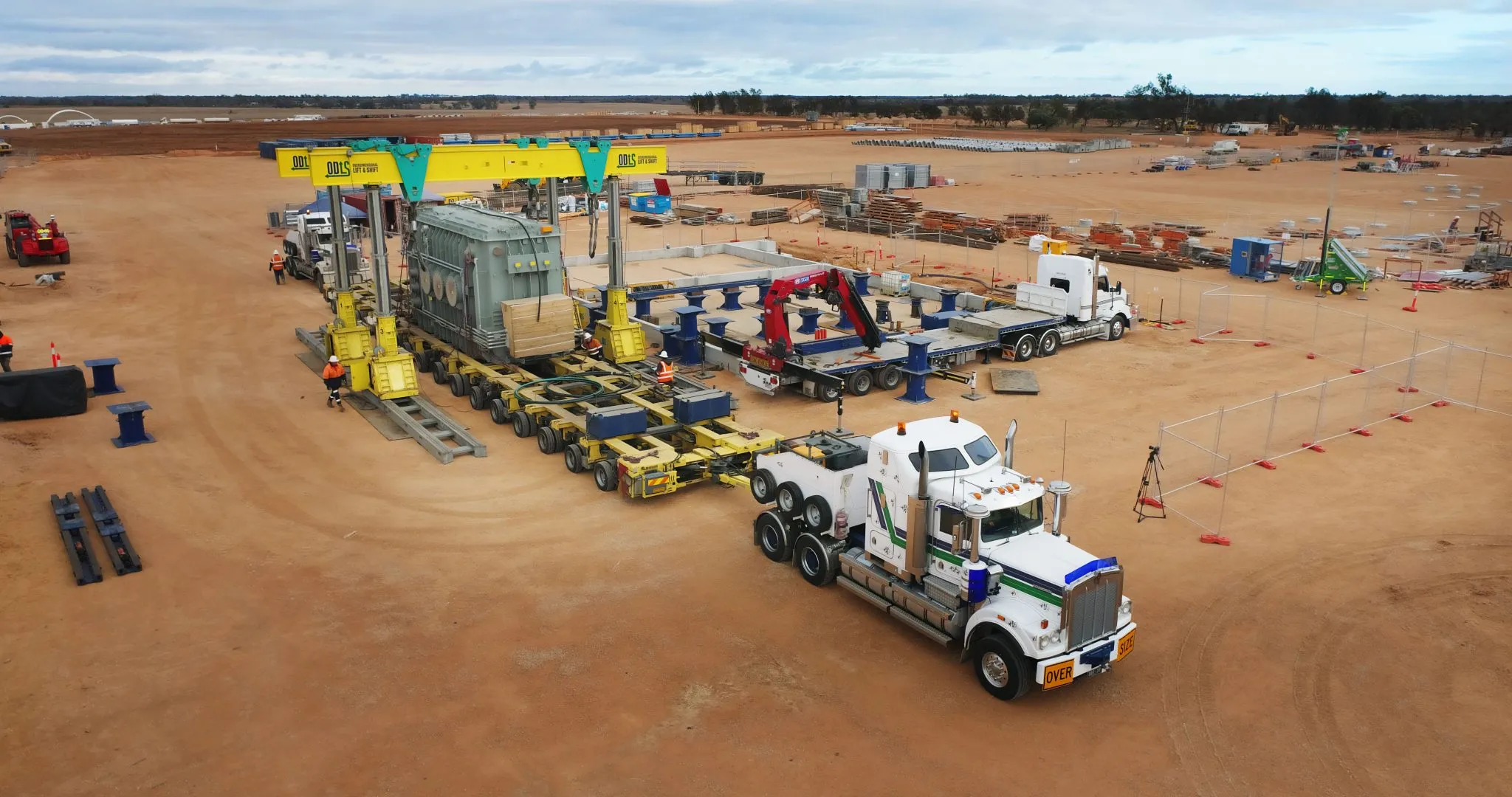
Imagine our roads with no trucks, cranes, and trailers crossing the continent, carrying the goods and machinery that keep our industries going. Without the much-needed service of heavy haulage, the economy would come to a halt. Heavy haulage is unsung, keeping the fire of Australian economy burning, making sure oversized critical goods are moved with efficiency around our vast country.
At ODLS, we have a deep understanding of how heavy haulage keeps Australia moving. Heavy haulage plays a vital role, whether it’s moving things for power generation, mining, agriculture, or construction, or connecting remote communities. This article takes a look at how essential heavy haulage is to our economy, exploring its significance, the challenges it faces, and what the future might hold.
Heavy Haulage: The Lifeblood of Australian Industry
What is Heavy Haulage?
Heavy haulage refers to the movements of oversized and overweight loads that cannot be accommodated nor transported by conventional vehicles. A few examples-power generation equipment, mining equipment, construction materials, farm machinery, and even relocating a whole building. In other words, the cargo which keeps the industries and infrastructure of Australia running.
Key Industries supported by Heavy Haulage
- Power Generation and Distribution: Heavy haulage delivers the Power Transformers, Reactors, Generators vital to the generation and distribution of Power – supporting both the existing and fast growing Green Energy power grid.
Heavy and Overdimensional haulage also moves the wind tower components across the country.
- Mining and Resources: Heavy haulage delivers the enormous mining equipment components to the most remote locations in Australia. Oversized movers then haul the mined resources around. Without heavy haulage, Australia’s export program grinds to a halt.
- Construction and Infrastructure: The contruction of the nation’s future infrastructure requires heavy haulage for tunnel borers, steel and concrete sections, cranes, and prefabricated structures. Heavy haulage delivers the equipment and material to makes the drawings a reality.
Heavy Haulage in the Supply Chain
Heavy haulage is part of Australia’s supply chain. It delivers the supplies that every industry in the country requires at whatever time they may need it so they can keep their production lines and projects on time.
Driving Economic Growth Through Heavy Haulage
Boosting Export Success
Exports keep the Australian economy thriving, and heavy haulage is the linchpin in this chain of success. Heavy haulage opens Australian businesses to international markets by transferring goods to ports and distribution centres.
Connecting Remote Communities
Being such a vast and spread-out country, most communities in Australia depend on heavy haulage for the delivery of their much-needed goods and infrastructural materials. Without it, many remote regions would struggle for the basics.
Creation of Employment
The heavy haulage sector is a significant source of direct and indirect employment, including:
- Direct Employment: Specialist drivers, crane operators, heavy lift operators and logistics coordinators
- Indirect Employment: Manufacturing, maintenance, support services, subcontractors for these and transport services across Australia.
Heavy Haulage and the Unique Geography of Australia: Overcoming the Challenges of the Outback
Shifting freight throughout this often remote, vast expanse of land does have its challenges. Heavy haulage operators are continually faced with variable terrain, extremes of weather, and serious distances.
Infrastructure Matters
Efficiency in heavy haulage also depends on a sound Australian road and rail network. Therefore, major investments in infrastructure will go a long way in ensuring the goods are moved safely and on time.
Environmental Concerns
With the ever-increasing demand for heavy haulage, there is also an ever-growing need to start considering its sustainability. Basic steps in fleet modernisation with fuel-efficient vehicles and reduction of emissions help reduce the carbon footprint of the Industry.
Innovative Technology Usage in Heavy Haulage
Fleet Modernisation
ODLS is at the forefront of deploying advanced fuel-efficient vehicles built to handle oversized loads with minimal environmental impact.
GPS and Tracking Systems
GPS tracking by technology ensures the efficiency of routes, fuel economy, and safety of the cargos.
Future of Automation
Heavy haulage has entered a new frontier: semi-autonomous vehicles. Inventions can sometimes change the paradigm to make the industry safer and decrease operational expenses. It will be exciting to see how the future unfolds in this regard.
Economic Resilience and Heavy Haulage in Crises
Pandemic Response
During COVID-19, heavy haulage played a vital role in the continuum of movement for life-saving supplies, medical equipment, and other essential products.
Natural Disasters
From flooding to bushfires and whatever form of natural disaster may occur, heavy haulage has always been at the frontline in supplying emergency relief supplies and equipment to affected areas.
Recovery and Rebuilding
In disaster events, heavy haulage aids in the rebuilding of the communities through the transportation of machinery and other construction equipment to where they are most needed.
Challenges Facing Heavy Haulage
Clearing the Regulatory Hurdles
The rules around heavy haulage permitting can be extremely complex. With many Third Parties involved in the process and now the addition of a Transport Development Application (DA) forcing route nomination by the project years ahead of time, securing the permits and authorities to move Heavy Haulage in Australia has never been less efficient.
Labour Shortages
Skilled driver and technician shortages continue in the Haulage industry right across Australia. The industry needs to be made much more attractive to young workers, with heavy investments in training programs.
Bottlenecks in Infrastructure
There are ageing roads and bridges that challenge the movement of oversized loads and reduce the ability to use previously approved routes. Infrastructure across Australia needs a measured approach to maintenance, to sustain reasonable approval timeframes and keep project costs down in the future.
The Future of Heavy Haulage in Australia
Sustainable Practices
With the rise in environmental concerns, heavy haulage firms like ODLS are ensuring they turn over the fleet more often to take advantage of the improvements of engine emissions.
Government Support
The Industry requires further streamlining for the approvals process and investment in infrastructure maintenance to build an enabling environment. Industry bodies work closely with Transport Operators and the government, to improve support to a sector which is the backbone of the economy of Australia.
Embracing Technological Advances
As with any industry, technological changes are always impacting, from automation to real-time data analysis, mapping system and A1 processing and recording of travel and mapping data, technology will drive efficiency and innovation in the heavy haulage industry.
At ODLS, we are proud to be a front runner of this integral industry, which offers specialised solutions in transport, logistics, and heavy lifting. With a strong focus on safety, quality, innovation, and the environment, we proudly serve our customers.
Ready to Help Move Australia?
If heavy haulage is involved, find out how ODLS can help you get what you need; make a transport and logistics leader your business partner.